
Tech
Investment Tips Ftasiatrading 2026: Smart Strategies for Long-Term Growth

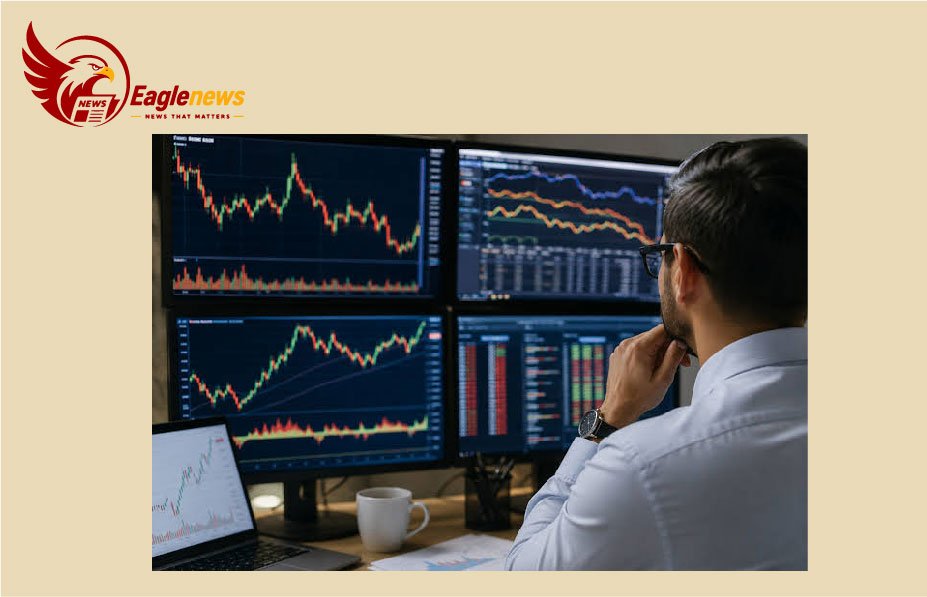
Search for investment tips Ftasiatrading and you’ll find articles that agree on very little. Some describe a trading platform with AI tools and demo accounts. Others are written by someone claiming hundreds of personal trades. A few treat “FTA Asia” as a theme about free trade agreements. Almost none say who is actually behind the name.
So this article does two things. It explains what the name seems to refer to, and then it gives you long-term investing strategies that work no matter which platform, broker, or buzzword is attached to them.
What “Ftasiatrading” Refers To
The sources describe at least four different things.
| Description | Where it shows up | The catch |
|---|---|---|
| A trading platform with AI tools, trading bots, and demo accounts | Pages promoting “FtAsiaTrading” features | No named company, license, or regulator listed in what I reviewed |
| A personal trader’s method, including a “5% rule” and “473 trades since 2021” | A blog written in the first person | The author can’t be identified, so the claims can’t be checked |
| An Asia strategy about free trade agreement (FTA) partners | Articles on investing in Asian markets | A topic, not a product |
| A general set of investing tips on stocks, forex, commodities, and crypto | Several “complete guide” pages | Generic advice repeated with the keyword added |
Some of these pages share headings and wording with unrelated titles, such as “Investment Tips Disfinancified.” That suggests a content template, not a single organization.
Before You Trust Any Platform With Money
The first investment tip is about who holds your money.
- Check registration. In Singapore, look at the Monetary Authority of Singapore’s financial institutions directory. In Hong Kong, use the Securities and Futures Commission’s public register. In the US, check the SEC and FINRA BrokerCheck, and in the UK, the FCA register.
- Be wary of AI bots that promise profits. No trading bot can remove risk, and claims of “removing emotional bias” aren’t evidence of results.
- Treat guaranteed returns as a stop sign. Real investments carry risk.
- Be careful with referral bonuses and pressure to deposit quickly. These are common tactics on dubious platforms.
- Use demo accounts for learning only. A demo shows how an interface works, not whether the company is trustworthy.
If you can’t find a regulator listing for a platform, don’t deposit money.
Long-Term Strategies That Hold Up
This is general information, not personal advice. The principles below are widely used by long-term investors.
Start with a goal and a timeline
Money you’ll need in two years shouldn’t sit in the same place as money for retirement in thirty. Short timelines call for safer holdings, like cash or short-term bonds. Longer horizons can handle more ups and downs.
Build an emergency fund first
An emergency fund lets you avoid selling investments at a bad moment. Many people aim for several months of essential expenses before taking on significant market risk.
Diversify across assets and regions
Owning many different holdings spreads the damage if one fails. A broad, low-cost index fund holds hundreds of companies in a single purchase. Mixing stocks with bonds can soften sharp drops.
Keep costs low
Fees compound just like returns do. Look at fund expense ratios, trading commissions, and account fees. Trading often can erode returns, so a few well-chosen holdings usually beat constant activity.
Invest regularly
Putting in a fixed amount each month, known as dollar-cost averaging, takes the guesswork out of timing. Here’s a hypothetical illustration, not a forecast. If you invested $500 a month for 20 years and earned an average of 6 percent a year, you’d end up with roughly $231,000, of which $120,000 would be your own contributions. Real returns vary, and some years will be negative.
Rebalance once or twice a year
Over time, winners grow and your mix drifts. If you wanted 70 percent stocks and 30 percent bonds, and stocks have swelled to 80 percent, sell some and restore the balance. It’s a simple way to buy low and sell high without predicting anything.
Plan for your own behavior
Most investing mistakes are emotional: panic selling in a downturn or chasing a trend after it has already surged. Write down your rules in advance. Ask yourself how you’d react if your portfolio dropped 15 percent in a month, and choose holdings you can live with.
Investing in Asian Markets
If you want exposure to Asia, a few extra points apply.
- Use broad funds. Regional or country index funds spread risk better than a handful of stocks.
- Watch currency risk. Exchange rate moves can add to or subtract from your returns.
- Don’t put everything in one region. Concentration is risky even when the growth story is strong.
- Treat trade agreement news as one factor among many. Companies that benefit from lower tariffs can be worth studying, but a headline isn’t a forecast.
A Quick Checklist
- Define your goal and timeline.
- Build an emergency fund.
- Verify any broker or platform with a regulator.
- Choose diversified, low-cost funds.
- Invest on a schedule.
- Rebalance once or twice a year.
- Ignore promises of guaranteed profits and bots that “beat the market.”
Where to Start This Month
Ftasiatrading isn’t a clearly identified, regulated company. It’s a keyword attached to many pages with contradictory claims, some of which describe features nobody has verified.
You don’t need it to invest well. Check who holds your money, spread your risk, keep costs low, invest regularly, and stay calm when markets drop. If your situation is complex, a licensed financial adviser can help you apply these ideas to your own goals.


Investment Tips Ftasiatrading 2026: Smart Strategies for Long-Term Growth

VocalNewsMedia com Review: Benefits, Limitations, and Key Facts

How Roarbiznes Business Infoguide From Riproar Supports Business Planning and Growth

Do The Driving Modes in Cadillac Lyriq Offer Different Ranges or Battery Usages?

Tara Renee Schemansky: The Private Life of an American Lawyer and Hollywood Wife

Benzynews Com: Your Complete Guide to a Multi-Topic Online News and Information Platform
-
 Tech3 months ago
Do The Driving Modes in Cadillac Lyriq Offer Different Ranges or Battery Usages?
-
 Celebrity3 months ago
Tara Renee Schemansky: The Private Life of an American Lawyer and Hollywood Wife
-
 Tech3 months ago
Benzynews Com: Your Complete Guide to a Multi-Topic Online News and Information Platform
-

 Celebrity3 months ago
Eduardo Hagn: The Rise of Arsenal’s Most Influential Independent Football Analyst
-

 Celebrity3 months ago
Kent Valandra: The Private Half-Brother of Game Show Legend Bob Barker
-

 Tech2 months ago
Droven.io USA: A Vendor-Neutral Guide to AI and Automation Tools
-

 Celebrity3 months ago
A Moment Frozen in Time: Julia Martinez’s Quinceañera and the Fragility of Life
-

 Tech3 months ago
Crew CloudySocial: The Complete Guide to Smarter Social Media Teamwork and Collaboration