
Tech
Ziimp .com for Beginners: Exploring Finance, Investing, and Market News

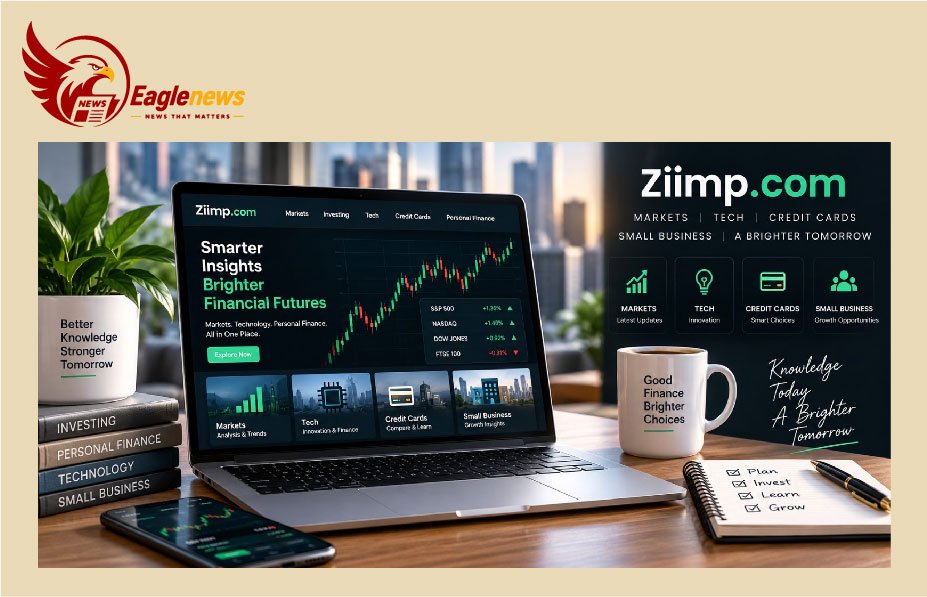
If you’ve landed on Ziimp .com, you probably have a simple question: what is this site, and can a beginner learn anything useful from it? The answer is a qualified yes, as long as you understand what it is and what it isn’t.
This guide covers what the site appears to be, where the confusion about it comes from, and how a beginner can use any finance information site without making a costly mistake.
What Ziimp .com Appears to Be
Here is what the available sources say.
| Question | What the sources show |
|---|---|
| Type of site | A finance and technology information site, not a financial service |
| Topics | A site using the Ziimp name lists Tech, Credit Cards, Trading, Markets, and Investing |
| Is it a bank or broker? | Two third-party write-ups say the site’s own disclaimer states it is not a registered investment adviser, broker-dealer, bank, or financial institution |
| Who runs it? | No clearly named owner or team in the sources I reviewed |
| Is there a trading platform? | None confirmed. Only some articles claim one |
| Is there a credit card issuer? | None confirmed |
In plain terms, it looks like a publication that writes about money. It isn’t presented as a place to open an account.
Where the Confusion Comes From
Several articles describe Ziimp as something much bigger.
One says users create an account and trade through the site. Another describes “Ziimp credit cards” as co-branded products with interest rates of 10 to 25 percent and approval in a few days. Neither claim is backed by anything I could verify, and both conflict with the site’s own reported disclaimer that it isn’t a financial institution. Another write-up hints that the current site presents itself differently from earlier descriptions.
Part of the problem is that “Ziimp” is also used on look-alike domains, such as ziimp.us, and that similar-sounding names belong to unrelated businesses. Ziina, for example, is a UAE payments company with its own central bank license. Ziilch is an Australian giveaway site. Neither is connected to Ziimp.com, so don’t mix them up.
Using a Finance Site as a Beginner
A good finance site helps you learn the vocabulary. Here are a few ideas you’ll run into constantly.
Stocks versus funds. A stock is a share in one company. A fund holds many investments at once, which spreads risk. Many beginners start with broad, low-cost index funds for that reason, though that isn’t advice for any particular person.
Interest rates. They affect both sides of your money. Higher rates tend to make savings accounts more attractive and borrowing more expensive.
Credit card APR. This is the yearly cost of carrying a balance. If you pay your full statement each month, you generally avoid interest. If you don’t, the rate matters a lot.
Risk and return. Higher potential returns come with higher potential losses. Any promise of high returns with no risk is a warning sign.
Diversification. Spreading money across different investments reduces the damage if one of them fails.
Reading market news without panic
Market news can feel urgent, but a headline isn’t an instruction. Prices move daily for many reasons, and most moves are noise for someone investing over years.
When you read a market article, check three things: the date, whether it reports facts or offers an opinion, and whether it names its sources. A story that predicts exactly what will happen next is guessing.
A Reality Check Before You Act on Anything Online
Even a trustworthy educational site can’t know your income, debts, goals, or risk tolerance. Treat what you read as background, then verify before you act.
- For investments in the US, look up the firm or adviser on FINRA BrokerCheck and the SEC’s adviser search, and read the SEC’s investor education site, Investor.gov. Other countries have their own regulators.
- For credit cards, read the issuer’s own terms: the APR, fees, and penalty rates. In the US, the Consumer Financial Protection Bureau publishes plain-language guides.
- For any platform that wants your money, confirm that it is registered and that it, not a blog, controls your account.
If a content site pushes you toward trading, a card application, or a deposit, step back and verify who is behind the offer.
A Beginner’s Checklist
- Know what you’re reading. A site that disclaims being a broker or adviser is giving information, not personalized advice.
- Check the date. Rates, rules, and market conditions change.
- Look for named authors and sources. Statistics should link to something you can check.
- Verify with a regulator before using any broker, adviser, or lender.
- Never invest because of a promise. Guaranteed returns don’t exist.
- Start small and learn. Many brokerages offer education tools and low minimums, so you don’t need to commit much while you learn.
- Keep an emergency fund first. Investing money you may need soon is risky.
A Reasonable Way to Use It
Ziimp .com looks like an educational finance and tech blog, not a bank, broker, or card issuer. Read it for vocabulary and ideas, and be skeptical of third-party articles that describe it as a trading platform or a credit card product.
For anything involving real money, go to official sources and regulators, and talk to a licensed professional if your situation is complex. This article is general information, not financial advice, and the best use of any finance site is as a starting point for your own research.


VocalNewsMedia com Review: Benefits, Limitations, and Key Facts

How Roarbiznes Business Infoguide From Riproar Supports Business Planning and Growth

Ziimp .com for Beginners: Exploring Finance, Investing, and Market News

Do The Driving Modes in Cadillac Lyriq Offer Different Ranges or Battery Usages?

Tara Renee Schemansky: The Private Life of an American Lawyer and Hollywood Wife

Benzynews Com: Your Complete Guide to a Multi-Topic Online News and Information Platform
-
 Tech3 months ago
Do The Driving Modes in Cadillac Lyriq Offer Different Ranges or Battery Usages?
-
 Celebrity3 months ago
Tara Renee Schemansky: The Private Life of an American Lawyer and Hollywood Wife
-
 Tech3 months ago
Benzynews Com: Your Complete Guide to a Multi-Topic Online News and Information Platform
-

 Celebrity3 months ago
Eduardo Hagn: The Rise of Arsenal’s Most Influential Independent Football Analyst
-

 Celebrity3 months ago
Kent Valandra: The Private Half-Brother of Game Show Legend Bob Barker
-

 Tech2 months ago
Droven.io USA: A Vendor-Neutral Guide to AI and Automation Tools
-

 Celebrity3 months ago
A Moment Frozen in Time: Julia Martinez’s Quinceañera and the Fragility of Life
-

 Tech3 months ago
Crew CloudySocial: The Complete Guide to Smarter Social Media Teamwork and Collaboration