Game
Zuyomernon System Basketball Explained: Key Principles and Technique

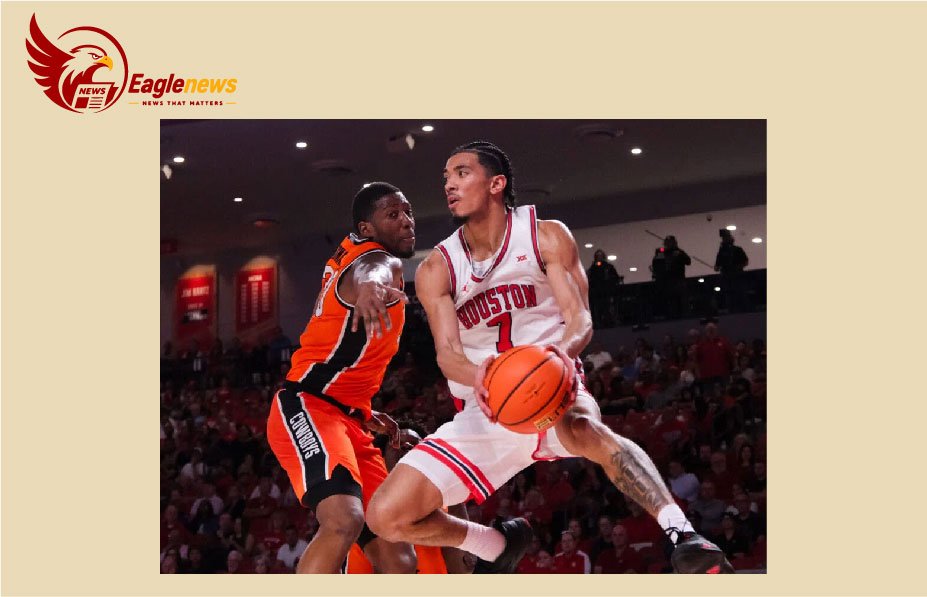
If you’ve come across the Zuyomernon System Basketball, you’ve probably read that it’s a “revolutionary” positionless strategy that’s reshaping modern hoops. Look a little closer and a different picture appears. The term doesn’t show up in coaching manuals or league documents, and several of the articles that use it admit as much.
That doesn’t make the ideas behind it useless. Most descriptions of Zuyomernon boil down to well-known modern basketball concepts: flexible roles, spacing, constant movement, and smart defense. This article explains what the term is claimed to mean, what’s actually verifiable, and how to turn the principles into real practice.
What Is and Isn’t Known
| Question | What the sources show |
|---|---|
| Is it an official system? | No. Several articles say it isn’t recognized by the NBA, USA Basketball, or other governing bodies |
| Who created it? | Unclear. One page credits an unnamed trainer, while another says it’s tied to no famous coach or team |
| What is it? | Described as a philosophy, a framework, or a practice approach, depending on the page |
| Is there evidence it works? | One article cites “promising results” in semi-pro and college play without naming any team or study |
| Is there a playbook? | Pages stress there are no fixed plays, only principles |
A fair summary: Zuyomernon is a label that has been attached to existing ideas. Treat it as a name for a style, not a proven system.
The Four Principles Most Pages Describe
Most descriptions list the same four pillars.
1. Positionless play
Players aren’t locked into roles like point guard or center. Everyone is expected to handle the ball, pass, shoot, and defend multiple spots. This reflects a trend in modern basketball, where big players often shoot and pass, and guards often rebound and defend bigger opponents.
2. Dynamic spacing
Spacing means keeping players far enough apart that one defender can’t guard two of them. Instead of standing in fixed spots, players move to fill open areas as the ball moves. About 15 feet between teammates is a common teaching guideline, though it varies by level.
3. Defensive versatility
Teams switch screens, help and recover, and adjust coverages based on the opponent. Several descriptions put defense at the center of the philosophy.
4. Sustainable tempo
Push the pace when you have an advantage, such as a numbers edge in transition, and slow down when you don’t. The aim is to avoid exhausting players with nonstop speed.
What’s Actually Behind These Ideas
None of these principles is new. Positionless play, spacing, and switching have developed over many years in professional and college basketball. Constant movement is the foundation of motion offense, an established system. Read-and-react approaches, which teach players to respond to what the defense does, are also widely used.
One page makes this point itself, saying motion offense is the more established term and Zuyomernon is newer and less clearly defined. Knowing that helps you borrow what works without relying on the name.
Technique: How the Principles Look in Practice
Here’s how a team might apply the ideas, based on common coaching methods.
Offense: read the defender, not a play call
- If your defender overplays, cut backdoor. The pass is open behind them.
- If a defender helps, move the ball. Pass to the open teammate, and shift to a spot that keeps spacing.
- If you pass, move. Cut to the basket, screen for someone, or relocate. Standing still is the most common spacing killer.
- If the ball is on one side, fill the weak side. Keep the floor balanced.
Defense: talk and rotate
- Call out screens early so teammates can switch or fight through.
- Close out on shooters under control, with high hands and short steps.
- Practice help-and-recover so the team doesn’t scramble when a drive breaks down.
Skill development
Positionless play only works if players can actually do the work. Everyone needs a usable handle, a catch-and-shoot jumper, solid passing, and the ability to guard different types of opponents.
A Sample 60-Minute Practice
- Warm-up (10 minutes): Dynamic stretching, passing in motion, and layup lines.
- Skills (15 minutes): Ball handling, shooting off movement, and closeout footwork.
- Small-sided games (20 minutes): 3-on-3 or 4-on-4 with rules, such as “every pass must be followed by a cut” or “no dribbling more than twice.” The rules force the habits you want.
- 5-on-5 with constraints (10 minutes): Play live with an emphasis on spacing and communication. Stop to correct mistakes right away.
- Review and cooldown (5 minutes): Talk through what worked, and stretch.
Small-sided games are the best way to build reads, because each player touches the ball more often and sees more decisions.
Common Mistakes
- Giving too much freedom too soon. Younger or less experienced players often need structure before they can improvise well.
- Ignoring roles completely. Even positionless teams need someone to protect the rim, someone to initiate offense, and someone to take open shots. The roles just rotate.
- Skipping fundamentals. Spacing and movement can’t fix poor passing or weak shooting.
- Copying a system without considering your players. A style that suits tall, skilled players may not fit a smaller roster.
- Treating a buzzword as proof. A name doesn’t make a system effective. Results do.
How to Judge Any Coaching “System”
- Is there a named creator and documented history?
- Can you see the principles explained in drills or game film?
- Are the claims backed by specific teams, seasons, or results?
- Does it match established concepts, and if so, what’s actually new?
- Can you test it for a few weeks and track outcomes like turnovers, shot quality, and defensive stops?
Borrow the Ideas, Skip the Hype
The Zuyomernon System Basketball is best seen as a catchy label for modern principles: flexible roles, smart spacing, active defense, and controlled tempo. There’s no verified origin and no official status.
Use what helps. Teach players to read the defense, move without the ball, and defend as a unit, and build the skills to support it. If you do, your team will benefit regardless of what the approach is called.



Connections Clues Today Forbes – How to Solve Today’s NYT Puzzle

Www. EuroGamersOnline .com: Discover the Best Gaming Guides and Gadgets

Blooket Host Guide 2026: How to Play Using a Game ID and Join Code

Do The Driving Modes in Cadillac Lyriq Offer Different Ranges or Battery Usages?

Tara Renee Schemansky: The Private Life of an American Lawyer and Hollywood Wife

Benzynews Com: Your Complete Guide to a Multi-Topic Online News and Information Platform
-
 Tech4 months ago
Do The Driving Modes in Cadillac Lyriq Offer Different Ranges or Battery Usages?
-
 Celebrity4 months ago
Tara Renee Schemansky: The Private Life of an American Lawyer and Hollywood Wife
-
 Tech4 months ago
Benzynews Com: Your Complete Guide to a Multi-Topic Online News and Information Platform
-

 Celebrity4 months ago
Kent Valandra: The Private Half-Brother of Game Show Legend Bob Barker
-

 Celebrity4 months ago
Eduardo Hagn: The Rise of Arsenal’s Most Influential Independent Football Analyst
-

 Tech3 months ago
Droven.io USA: A Vendor-Neutral Guide to AI and Automation Tools
-

 Celebrity4 months ago
A Moment Frozen in Time: Julia Martinez’s Quinceañera and the Fragility of Life
-

 Tech4 months ago
Crew CloudySocial: The Complete Guide to Smarter Social Media Teamwork and Collaboration